

As an SBA 7(a) lender, we provide cash-flow-based financing for business acquisitions, partner buyouts, real estate, equipment, construction, expansion, and other eligible business needs. Approval primarily hinges on whether the business can service the debt, not simply on collateral.
- 10- to 25-year fully amortizing terms
- Financing of up to about 90% of the total project cost (the sum of all associated costs for project completion)
- No loan covenants
All this is available while combining multiple eligible uses within a single loan. This flexibility makes SBA lending useful for complex transactions.
U.S. citizens who own for-profit businesses incorporated in the U.S. can apply.
See whether your deal fits in the Find Your Fit section below.
Have questions about SBA financing? Tell us about your project, and a member of our SBA Lending team will help you explore potential financing options and next steps.
All this is available while combining multiple eligible uses within a single loan. This flexibility makes SBA lending useful for complex transactions.
-
![Stopwatch icon]()
SBA Preferred Lender
With in-house approvals, your SBA 7(a) loan and its SBA guarantee do not wait in the SBA's underwriting queue, so decisions come faster, and your closing timeline stays on track.
-
![Shield with star icon]()
Top 50 National SBA Lender
Ranked #34 among U.S. SBA lenders, reflecting a consistent commitment to SBA financing and support for business owners nationwide, from first-time buyers and startups to established, growing companies.
-
![Rising bar chart icon]()
Real Volume and Real Experience
Since October 1, 2025, TowneBank SBA Lending has approved $192.8 million in SBA loans, reflecting extensive experience supporting business acquisitions, commercial real estate purchases, practice financing, and growth-focused transactions.
-
![Briefcase icon]()
SBA Lending Is Our Entire Business
More than 50 professionals work exclusively on SBA lending, bringing specialized expertise to every transaction, from the first conversation through closing and servicing, and supporting business owners across 48 states.
-
![Wreath icon]()
TowneBank SBA Lending
Specialized SBA lending expertise backed by the resources of a $22.6 billion relationship bank with more than 70 banking offices across its footprint, giving you local support at every step.




Sometimes the opportunity is sound, but conventional financing does not quite fit. Perhaps collateral falls short, your industry receives limited conventional financing, or you do not want to bring 25% of the purchase price in cash before fees and closing costs.
That gap can matter. A buyer may move ahead of you, a lease may renew at a higher rate, or a retiring partner could sell elsewhere.
SBA 7(a) financing is designed for deals like these. The SBA guarantee mitigates collateral shortfalls, making unsecured amounts well over $2 million possible in some transactions.
At TowneBank SBA Lending, we look at the complete picture (including cash flow, experience, credit, collateral, and the transaction itself) to identify deals that make sense, rather than deals that check boxes.
Our SBA loan requirements are designed to help you save time by determining fit early. Your deal may be a good fit if you are:
- Buying an existing business
- Buying out a partner
- Buying your company's building
- Building or renovating
- Buying a franchise
- Expanding your business
- Financing equipment purchases

U.S. citizens who own for-profit businesses incorporated in the U.S. can apply. For owner-occupied real estate, your operating business generally must occupy at least 51% of an existing building or 60% of new construction.

We finance operating businesses, not investment property. So, a conventional loan may be a better fit for an investment property.
Standalone day-to-day working capital is also outside our focus, although working capital can be included in a larger 7(a) transaction.
If these U.S. Small Business Administration eligibility requirements sound like they fit your deal, then SBA lending may be worth exploring.
The distinction starts with how we evaluate the loan. SBA 7(a) loans are primarily cash-flow based, which means approval depends on whether a business can comfortably service the debt. This differs from placing significant weight on whether collateral is enough to cover a loan request.
Additionally, SBA loan rates matter. However, loan terms and repayment terms often impact your monthly payment and cash requirements more significantly than interest rates.

Loan terms with longer repayment lead to a lower monthly payment, without a balloon payment at maturity.

An acquisition, eligible real estate, equipment, and working capital can sometimes be combined to meet your business’s needs with one financing structure, one set of loan terms, and one closing instead of several.

Borrowers don’t face annual ratio tests that could trigger a technical default simply because a ratio moves outside a prescribed range.

In certain situations, such as qualifying partner buyouts or rent-replacement purchases, up to 100% financing might be possible.
The 7(a) loan program’s unique loan terms offer financing structured around your business needs, not your collateral.
With an entire team built around SBA lending, from the first conversation through servicing, we have a clearly defined, seven-step loan process. A dedicated junior lender and written checklists keep each file organized, creating a strong sense of urgency throughout our loan process.
We review your documents and aim to answer within two to three days. Owners of more than 20% provide three years of personal tax returns, SBA Form 413, a resume, proof of personal equity sources, and required business documents.
After initial review, we issue a term sheet. Signing it and providing a good-faith deposit moves the deal forward.
A loan-specific checklist arrives by email or secure link. No loan file can move to credit until it is complete, making document speed an important part of your timeline.
An underwriter reviews the file and sends questions. We strive to make a credit decision within 10 business days of assigning an underwriter. We send a draft closing checklist at the same time.
Construction deals undergo an additional review, using construction quotes to confirm credit appetite while architecture, engineering, and contracts are assembled. This review is not a commitment to lend.
After the commitment letter is signed and the closing-cost deposit is received, a dedicated closer leads the file. The closer meets with you, both attorneys, and the lender to review the checklist. We must receive all documents at least five business days before we can schedule a closing date.
A dedicated Portfolio Manager becomes your primary point of contact for the life of the loan.
Since SBA lending is all we do, files do not wait behind mortgages or car loans, and as an SBA Preferred Lender, we can approve 7(a) loans in-house rather than waiting in the SBA’s queue.
Review what happens at each stage of the SBA Lending process, the goal of every step, and the information you'll typically need to provide as your loan moves from pre-screen through underwriting, closing, and ongoing servicing.
| Step | Pre-Screen | Proposal Letter (Term Sheet) | Completing Submission | Underwriting | Construction (If Applicable) | Closing | Post-Closing & Servicing |
|---|---|---|---|---|---|---|---|
| Goal/Time | 2-3 days | After initial review | Until file is complete | 10-business-day credit goal* | Additional review | Typically 30-60 days | Life of loan |
| You Provide | Personal & business documents | Signed term sheet & good faith deposit | All requested documents & answers | Responses & additional documents | Quotes & project documents | Closing documents at least 5 business days before closing | Ongoing communication |
| Goal/Time | 2-3 days |
|---|---|
| You Provide | Personal & business documents |
| Goal/Time | After initial review |
|---|---|
| You Provide | Signed term sheet & good faith deposit |
| Goal/Time | Until file is complete |
|---|---|
| You Provide | All requested documents & answers |
| Goal/Time | 10-business-day credit goal* |
|---|---|
| You Provide | Responses & additional documents |
| Goal/Time | Additional review |
|---|---|
| You Provide | Quotes & project documents |
| Goal/Time | Typically 30-60 days |
|---|---|
| You Provide | Closing documents at least 5 business days before closing |
| Goal/Time | Life of loan |
|---|---|
| You Provide | Ongoing communication |
*Goal begins once an underwriter is assigned.
So, how long does an SBA loan take? The biggest SBA loan timeline variable is how quickly you provide complete documents.
Acquisitions and partner buyouts account for roughly 60% of what our division funds, representing real experience in this area. SBA 7(a) loans offer a variety of flexible financing options. If your situation looks like one of these, an SBA 7(a) loan could provide a practical path forward:
-
Business Acquisitions
![2 business people sharing a handshake]() Buying a Business
Use an SBA loan to buy a business, including acquiring a competitor.
Up to 100% financing is available on some qualifying transactions, preserving liquidity for other business needs.
Existing cash flow and operating history can support underwriting.
Learn MoreLearn how SBA financing can support ownership transitions, competitor acquisitions, and other business purchase opportunities in our Business Acquisition Financing Guide .
-
Business Expansion
![man sitting in a coffe with laptop]() Business Expansion & Startup Financing
Growth initiatives often involve facility improvements, equipment purchases, hiring, and working capital needs that can be financed through an SBA structure.
An SBA Express loan could also serve as a companion line within the 7(a) structure, providing additional flexibility.
Learn MorePlanning to grow an established business? Explore Business Expansion Financing .
Starting a new venture? Learn About Startup Financing .
-
Construction
![man working construction]() Construction & Renovation Projects
SBA construction loans support ground-up construction, renovations, additions, and leasehold improvements.
Financing can be used to create new facilities, modernize existing properties, or expand operational capacity to support long-term business objectives.
Learn MoreExplore eligible project types, construction structures, and renovation financing options in our SBA Construction Financing Guide .
-
Franchise
![man sitting infront of a computer]() Franchise Financing
Whether you're purchasing your first location or expanding an existing franchise portfolio, SBA financing may help support acquisition costs, equipment, real estate, build-out expenses, and working capital needs associated with growth.
Financing may be available for both single-unit opportunities and multi-unit expansion strategies, subject to SBA eligibility and credit requirements.
Learn MoreExplore eligible concepts, financing structures, and common franchise growth scenarios in our Franchise Financing Guide .
-
Commercial R.E.
![3 people smilling]() Owner-Occupied Commercial Real Estate
Finance the building your company operates from with owner-occupied commercial real estate lending.
Your operating company must generally occupy at least 51% of an existing building or 60% of new construction.
When a transaction includes both a business and its real estate, an SBA 7(a) and SBA 504 loan can sometimes be combined on one deal.
Learn MoreReview occupancy requirements, financing structures, and owner-user eligibility in our Owner-Occupied Commercial Real Estate Guide .
-
Partner Buyouts
![person signing a contract]() Partner Buyout Financing
Partner buyout financing is intended to fund the purchase of a retiring, departing, or deceased partner's ownership interest, with up to about 90% of the Total Project Cost financed and sometimes more.
SBA financing can help simplify ownership transitions by providing a structured path for remaining owners to acquire an ownership stake while preserving working capital for ongoing business operations.
Learn MoreExplore funding options, eligibility requirements, and common ownership transition scenarios in our Partner Buyout Financing Guide .


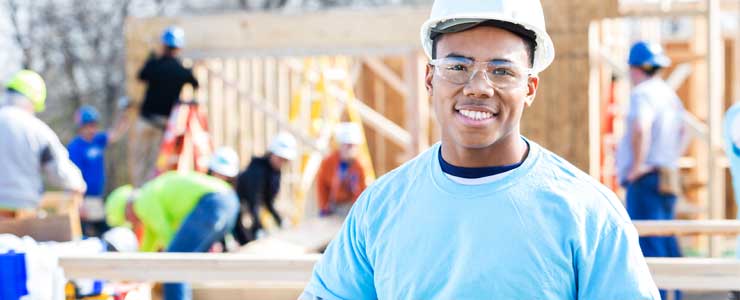



SBA 7(a) loan requirements give business owners a straightforward way to assess whether a business qualifies before investing time in an application.
U.S. citizens who own the business can apply; foreign-entity ownership is not eligible.
Businesses incorporated in the U.S., whether existing or newly formed, qualify.
The business must be organized for profit.
Small business loans are for small businesses, so size matters. We use the alternative size standard, which requires tangible net worth of no more than $20 million and average after-tax net income of no more than $6.5 million for the two full fiscal years before application. This is not a revenue threshold.
When business assets do not fully secure the loan on a discounted basis, SBA rules require the lender to look to the personal assets of owners holding 20% or more. Liens on personal real estate are common.
An individual 7(a) loan can be up to $5 million. In some circumstances, a borrower may access up to $5 million through a 7(a) plus $5 million through a 504, for $10 million combined.
Understanding the eligibility requirements early can save time and help determine whether SBA 7(a) financing is the right path for your
Both SBA 7(a) and SBA 504 financing can help business owners grow, acquire, build, or purchase owner-occupied real estate, but they are structured differently and are often used for different objectives. Compare how each program can be used, how funds are structured, cash-at-closing expectations, and when the two programs may be combined within the same transaction.
| SBA 7(a) Loan | SBA 504 Financing | |
|---|---|---|
| What It Finances | Acquisitions, buyouts, real estate, equipment, construction, expansion | Owner-occupied real estate and major equipment |
| How Funds Can Be Used | Multiple eligible uses in one loan (including working capital within a larger transaction) | Eligible fixed assets with a useful life of at least 10 years |
| Typical Structure | Cash-flow-based; up to about 90% of total project cost | Fixed-asset financing through a certified development company (CDC) |
| Cash at Closing | Up to 100% financing in specific qualifying situations | Equity injection varies by project |
| Can They Combine? | Yes, on eligible transactions | Yes, with 7(a) on eligible transactions |
| Process | Preferred Lender, in-house approval; 10-business-day credit decision goal once an underwriter is assigned | Additional CDC underwriting; longer timeline |
| What It Finances | Acquisitions, buyouts, real estate, equipment, construction, expansion |
|---|---|
| How Funds Can Be Used | Multiple eligible uses in one loan (including working capital within a larger transaction) |
| Typical Structure | Cash-flow-based; up to about 90% of total project cost |
| Cash at Closing | Up to 100% financing in specific qualifying situations |
| Can They Combine? | Yes, on eligible transactions |
| Process | Preferred Lender, in-house approval; 10-business-day credit decision goal once an underwriter is assigned |
| What It Finances | Owner-occupied real estate and major equipment |
|---|---|
| How Funds Can Be Used | Eligible fixed assets with a useful life of at least 10 years |
| Typical Structure | Fixed-asset financing through a certified development company (CDC) |
| Cash at Closing | Equity injection varies by project |
| Can They Combine? | Yes, with 7(a) on eligible transactions |
| Process | Additional CDC underwriting; longer timeline |
Buying a business generally points to the 7(a), while buying your building often points to 504 financing. If you are buying both, the two programs can sometimes work together.
Whether you're buying a business, purchasing commercial real estate, financing a partner buyout, expanding operations, or funding a construction project, the first step is understanding which financing options may fit your situation.
Get started with our SBA 7(a) pre-screen, and we'll review your opportunity to help you understand what financing options may fit. Our team will evaluate the information you provide and help you determine the most practical path forward.
Get StartedWe finance business owners and buyers across a wide range of industries, ownership transitions, growth opportunities, and professional practices.
- Buyers acquiring existing businesses
- First-time buyers working with a broker
- Partners buying out a departing partner
- Franchise buyers seeking franchise financing
- Owners purchasing their company's building
- Businesses expanding to new locations
- Construction and renovation projects
- Equipment and operational growth initiatives
- Licensed professionals acquiring practices
- Senior care operators
- Physicians, dentists, and veterinarians
- Attorneys, CPAs, architects, and engineers
- Pharmacies and insurance agencies
- HVAC, plumbing, electrical, and other trades
We do not offer deposit accounts, lines of credit, or merchant services. Our SBA-only focus means no cross-sell competition for the brokers, CPAs, and attorneys who refer business to us.
SBA 7(a) Loan Questions, Answered
-
It depends on the transaction and loan terms. SBA financing can cover up to about 90% of total project cost, and 100% financing is possible in specific situations. Longer terms can also mean a lower monthly payment and less cash required at closing. Your SBA 7(a) lender can help you anticipate your cash needs at closing.
-
The SBA guarantee can mitigate collateral shortfalls, so an eligible 7(a) loan may include unsecured amounts well over $2 million. We evaluate the entire transaction rather than requiring collateral to cover every dollar.
-
Potentially. Under SBA’s all-available-collateral rule, when business assets do not fully secure the loan, we generally look to available personal assets belonging to owners holding 20% or more. Personal real estate liens are common.
-
We aim to answer a pre-screen within two to three days. Once an underwriter is assigned, our goal is a credit decision within 10 business days. Closing typically follows in 30 to 60 days (as a goal), depending on the transaction.
-
Creditworthiness is one factor alongside cash flow, experience, and collateral. We do not promise a hard credit-score cutoff. Our approach is straightforward: we look for deals that make sense, rather than deals that check boxes.
-
Our SBA loan requirements focus on eligible, for-profit U.S. businesses and transactions. Our SBA 7(a) lenders do not finance investment property or standalone working capital. In these cases, conventional financing might be a better fit. Working capital can be included in a larger 7(a) transaction.
Whether you're buying a business, financing a partner buyout, purchasing real estate, expanding operations, or funding a construction project, the first step is determining whether SBA financing is a fit.
Complete the form below and our SBA Lending team will review your opportunity through our pre-screen process. With a two- to three-day pre-screen, we'll tell you early if it fits (or if it doesn't) and help you understand which financing options may be appropriate for your situation.
Some applications may require further consideration, and additional information may be required.
Credit terms are subject to approval.
Amount of Credit is subject to SBA program.